In the spring of 2009 two investigators from the Brooklyn District Attorney's office went to a brownstone on Sixth Avenue, Park Slope, to meet a woman named Irene Prusik. Her son had asked them to come. He had walked into the DA's Real Estate Fraud Unit in March to complain that his mother had been cheated out of her house, and when the investigators said they would like to speak to Mrs Prusik herself, he said that would be fine.
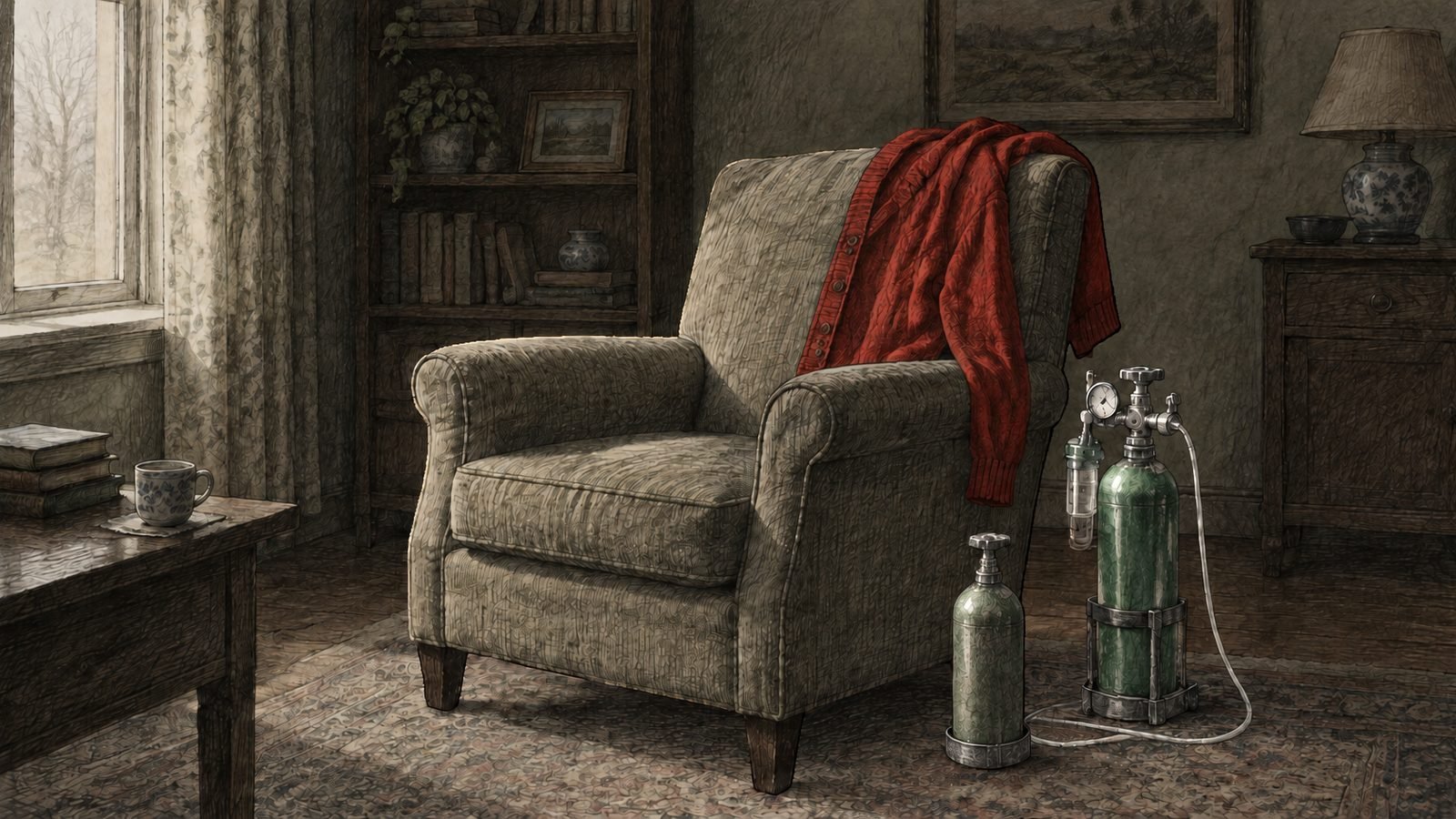
They were shown in. The lights were low. Mrs Prusik, in a red cardigan, with lipstick and manicured nails, sat breathing through an oxygen tank. Asked why the apartment was so dark, she explained that she had cataracts.
The investigators already knew two things. The first was that Irene Prusik had died on 10 September 2003; they had a photograph of her headstone. The second was that the person in the cardigan was her son, Thomas Prusik-Parkin, then 49.
Case file
- Deceased
- Irene Prusik, died 10 September 2003, Brooklyn
- Property
- 492 6th Avenue, Park Slope, Brooklyn
- Indicted
- June 2009 — 47 counts, with Mhilton Rimolo
- Convicted
- 3 May 2012, jury, Brooklyn Supreme Court — 11 counts
- Sentence
- 21 May 2012 — 13⅔ to 41 years (Justice Vincent Del Giudice)
- Reverse mortgage
- $938,250, declared void 30 September 2010
The paperwork
Keeping a dead parent alive for six years takes administration, and Parkin was an administrator.
According to the District Attorney's statement, the first step came within days of the death: Irene Prusik's death certificate was filed with a false Social Security number and a false date of birth. The certificate was real. It just did not match the woman whose cheques arrived each month, so the cheques kept arriving. The DA put the total at $52,000 over six years; the figure reported at trial was more than $44,000.
A second income was added. Parkin applied for city rental assistance on the basis that he was disabled and that his landlord was his mother — who, being dead, was easy to get on with. That came to about $65,000, the DA's office said.
When Mrs Prusik's driver's licence needed renewing, she went to the Department of Motor Vehicles to renew it. The DMV's cameras recorded a frail figure in a platinum-blonde wig, a dress and oversized sunglasses filling in the form, with a younger man at her side. The younger man was Mhilton Rimolo, described in court papers as Parkin's cousin, who accompanied "Mrs Prusik" on her errands in the role of a concerned nephew.
The house
The money was small change next to the house. The court record on the house is where the case stops being a stunt and becomes something stranger, and it comes from a judge rather than a press officer.
Irene Prusik had bought 492 Sixth Avenue in 1987. In 1996 a deed transferred it to Thomas Parkin — her husband, Thomas Parkin Sr, the court noted, not her son — and a year later he mortgaged it for $212,500. The mortgage went unpaid. In July 2003 a man named Samir Chopra bought the house at the foreclosure auction.
That was the problem Parkin spent the next six years trying to solve. His solution was to have his mother sue.
On 18 August 2003, three weeks before she died, an action was filed in Irene Prusik's name claiming her signature on the 1996 deed had been forged. After her death the case simply carried on as if she were alive. In November 2003 a "stipulation of settlement" was filed, signed by Irene Prusik — two months dead — in which the Parkin side agreed that the deed was fraudulent and the house was hers. In July 2004 a judge, who had no reason to suspect anything, signed a judgment declaring Mrs Prusik "the true and rightful owner in fee simple" of the property. A second lawsuit in her name was filed directly against Mr Chopra in 2004, months after her death.
In 2008 Parkin, now styling himself the administrator of his late father's estate, signed a deed conveying the house back to his mother, as the judgment directed. He also recorded a power of attorney, dated 2003, in which Irene Prusik appointed Mhilton Rimolo to handle her property affairs.
Then, on 3 April 2009 — with Mr Chopra finally back in court trying to unpick all of this — an individual purporting to be Irene Prusik took out a $938,250 reverse mortgage on the house. Rimolo signed the loan papers as her attorney-in-fact. Her signature was forged on the affidavit. And, the court found, "an individual impersonating the deceased Ms. Prusik appeared at the closing of the mortgage agreement."
It was that same month that Parkin walked into the DA's office to report that he and his mother were the victims of real estate fraud. The DA's office was already looking into the Social Security cheques.
What the judge said
Justice Robert J. Miller untangled the property side in September 2010, in a civil case Mr Chopra brought to get the mortgage struck off his house. His decision is the primary record of this case, and it is not kind.
The 2003 lawsuit, he found, "was a sham proceeding, designed to nullify the deed obtained by plaintiff in the foreclosure action." The property interest behind the reverse mortgage "rests upon multiple layers of forgery and fraud." The whole structure stemmed from "the 2003 legal action in which Thomas Parkin and/or Thomas Prusik-Parkin, in effect, sued themselves."
The mortgage was "riddled with forgeries and fraudulent acts including the use of an imposter to impersonate the deceased Ms. Prusik at the closing." It was declared void and ordered expunged from the register. In a footnote the judge recorded that Parkin, in sworn testimony in another case, had admitted that it was he, not his father, who executed the 2003 settlement.
The verdict
Parkin and Rimolo were arrested in June 2009 and indicted on 47 counts, including grand larceny, forgery, perjury, conspiracy and criminal impersonation. Many of the counts, the court noted, related directly to the reverse mortgage. Brooklyn District Attorney Charles Hynes called it "a multi-year campaign of fraud that was unparalleled in its scope and brazenness."
Rimolo pleaded guilty to grand larceny and criminal possession of a forged instrument. Parkin did not. He went to trial in April 2012, where the jury watched the DMV footage. His lawyer suggested the person in the wig "could've been anyone." The jury took less than a day and convicted him on 3 May 2012 of eleven counts: three of grand larceny, one of residential mortgage fraud, four of criminal possession of a forged instrument, one of forgery and two of perjury.
At sentencing on 21 May, Justice Vincent Del Giudice gave him 13⅔ to 41 years. "It borders on ludicrous that you expected to get away with this," the judge said, according to reports from the courtroom. Parkin, who maintained it was not him in the videos, took issue with the wardrobe: the blouses in evidence, he told the court, were "old discotheque shirts from the 1970s."
"Mr Parkin," the judge said, "you're an amazing character."
Why this case matters
Benefit fraud by the relatives of the dead is usually a crime of silence: nobody tells the agency, and the payments roll on. This one was a crime of performance. Every time the fiction needed Irene Prusik to appear — at the DMV, at a mortgage closing, in her own living room — her son put on the cardigan and appeared.
And the record shows how far paperwork alone will carry a lie. A dead woman sued, settled, won a judgment, received a deed, granted a power of attorney and borrowed nearly a million dollars, and at every step a clerk, a court or a lender accepted the signature. It took the one person with a reason to fight — the man who had actually bought the house — six years to get a judge to look.
The property history, the sham lawsuits and the reverse mortgage are taken from the published decision in Chopra v Metrocities Mortgage (2010). The disguise, the investigators' visit, the death certificate and the benefit figures come from the Brooklyn District Attorney's statement as reported at the time; the counts, sentence and courtroom remarks from reporting of the trial. No court record of the criminal case is published online. Figures differ slightly between sources and are attributed where they do.